
Deepfake Nudes and "Nudify" Apps: What Parents Need to Know
A deepfake nude is a fake sexual image built by AI from an ordinary photo. A calm parent's guide to nudify apps: the law, the response, and what to say first.

What deepfake nudes and "nudify" apps actually are

A deepfake nude is a fabricated sexual image of a real person, generated by artificial intelligence from an ordinary clothed photo. No real explicit picture ever existed — the AI invents one. A so-called "nudify" or "undress" app is a tool that does exactly this on demand: feed it a normal picture of someone, and it returns a fake nude of them.
The detail that unsettles most parents is how little it takes to start. The app needs nothing private. A single clear photo of a face and body — a school picture, a holiday snap, a public profile, a friend's tagged post — is enough. Your teen does not have to have taken, sent, or posted anything explicit. The raw material is the ordinary digital footprint any teenager leaves online — which is exactly why the fault never sits with the person in the photo.
When the person in the picture is under 18, the result is, in plain terms, an AI-generated sexual image of a child — and in a growing number of jurisdictions it is treated as child sexual abuse material, no matter how breezily the app markets itself. That is true whether a stranger made it or a classmate did. Depending on where you live, creating, possessing, or sharing such an image can itself be a crime. The technology is new; the category of harm is not.
How common deepfake nudes really are

More common than most parents realize — but concentrated in clear patterns, not scattered at random. The tools went mainstream fast. Analysts at Graphika found that a set of "undressing" sites drew more than 24 million visitors in a single month of 2023, as referral-link spam advertising them surged across social platforms.
The traffic kept climbing. When the San Francisco City Attorney sued the operators of sixteen of the most-visited nudify sites in 2024, the office found they had been visited more than 200 million times in the first half of that year alone. That case has since helped shut down ten of those sites — a reminder that the trend is being fought, not merely watched.
Inside schools, the picture is more concrete. A 2024 survey by the Center for Democracy & Technology found that 15% of US high-school students knew of at least one AI-generated explicit image depicting someone at their school. UK research by Internet Matters put teens with some experience of nude deepfakes at around 13% — roughly four children in a class of thirty.
- Not nicheA handful of nudify sites pulled 24 million visitors in one month, and sixteen sites logged 200 million-plus visits in half a year. The tools are mainstream, not fringe.
- In ordinary schoolsAbout 1 in 7 US high-schoolers knows of a deepfake explicit image at their own school. This usually arrives through the social world your teen already lives in.
- Targeting isn't evenAn estimated 99% of nude deepfakes depict women and girls. The harm lands hardest where reputation and peer standing already feel total.
Two patterns matter for how you respond. First, the targeting is overwhelmingly gendered: Internet Matters estimates that 99% of nude deepfakes depict women and girls, and many tools don't even function on images of boys. Second, the person behind a school incident is usually not a distant criminal but a peer — a classmate, an ex, someone with a grudge — using an app they found in an afternoon. The hub covers who creates these images in more depth.
Is it illegal? What the law now says
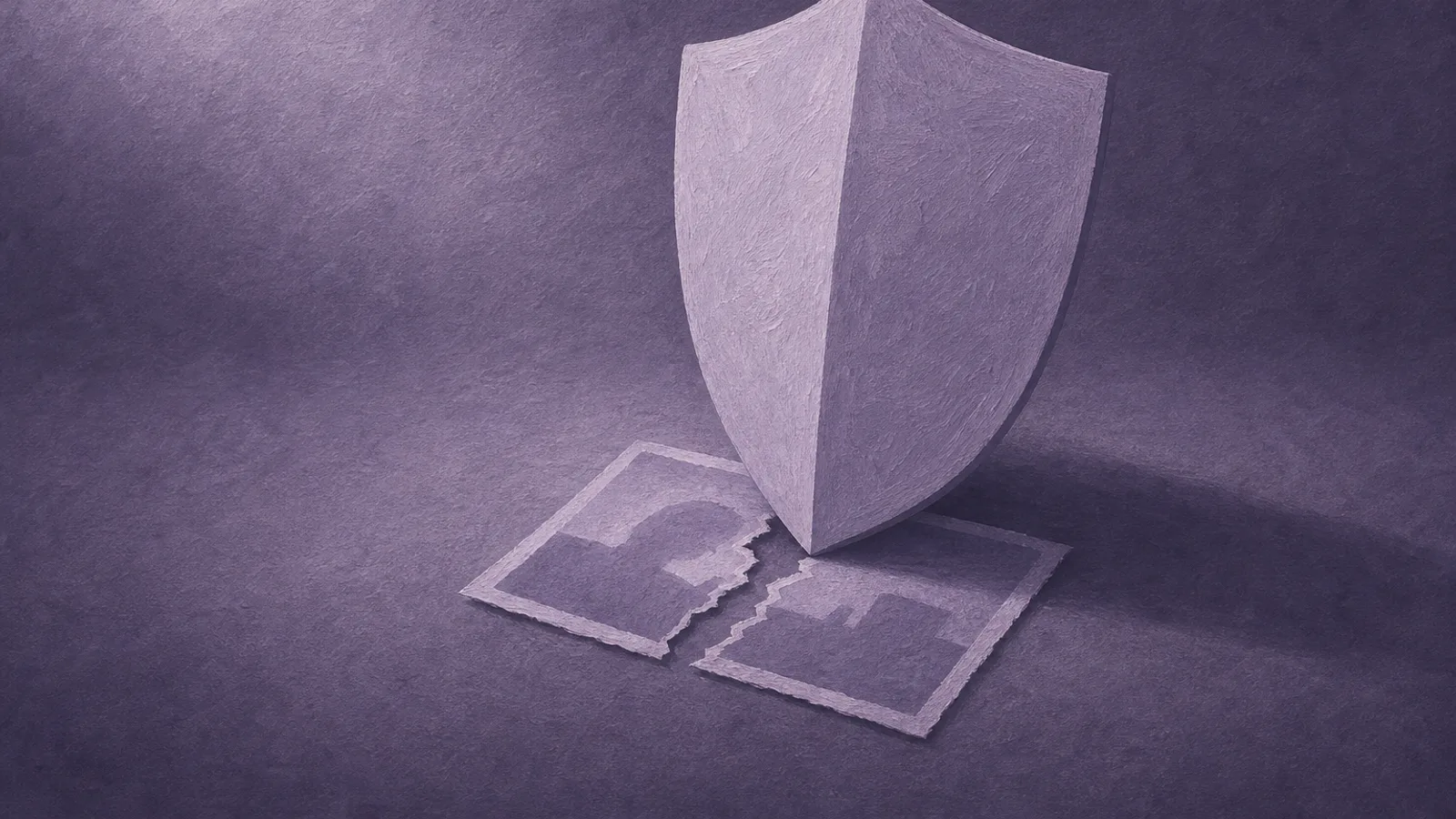
Yes — and increasingly so, with the law shifting firmly toward the person in the image rather than treating fakes as a loophole. The ground has moved fast enough that much of the advice parents half-remember is already out of date.
In the United States, the federal TAKE IT DOWN Act, signed into law on 19 May 2025, makes it a federal crime — in certain circumstances, with consent and intent elements — to knowingly publish or threaten to publish non-consensual intimate images, explicitly including AI-generated "digital forgeries." It also requires covered platforms to remove such content within 48 hours of a valid request, a duty that came into force in May 2026. Separately, a sexual fake of a minor can already be prosecuted under existing child sexual abuse material laws.
Other countries have moved the same way, and some have gone further. In England and Wales, sharing non-consensual intimate images was already an offence, and the Data (Use and Access) Act 2025 went further still — making it a crime to create or request a sexually explicit deepfake of an adult without consent, not only to spread it (Scotland and Northern Ireland have their own laws). Australia and several other countries have likewise strengthened their rules against sharing intimate images, including digitally altered ones.
Laws differ by country and none of this is legal advice. But the practical takeaway is the part that helps a frightened teenager: making or sharing a fake nude is not a clever workaround that leaves everyone untouchable. There are named offences, removal duties, and reporting channels — the map of which is in the pillar's guide to reporting AI abuse.
What to do if your teen is targeted

If a fake nude of your teen surfaces, the order of operations matters: protect your teen, preserve the evidence, then remove and report — in that sequence. Doing it in the wrong order, or letting panic drive the first move, is how families accidentally make things worse.
- Take the shame off the table first. Before anything technical, say it plainly: this is not your fault, and you are not in trouble. The image is fabricated and documents nothing your teen did; the offence belongs entirely to whoever made and shared it. Shame is the engine that keeps these images spreading, and removing it is the single most protective thing you can do.
- Do not pay or engage if it's a threat. If the fake arrives with a demand for money or more images — a pattern that shades into AI-driven sextortion — do not pay, and do not let your teen reply or send anything further. Paying marks a target as willing and almost always brings more demands.
- Preserve evidence without spreading it. Note the URLs, usernames, dates, and the platform where it appeared, and don't delete the conversation, messages, or accounts — they can matter later. Do not forward or repost the image, even to warn someone. If it is sexual imagery of a minor, follow NCMEC and platform instructions before saving any copy at all.
- Use a hashing removal tool. For anyone under 18, NCMEC's free Take It Down service turns the image into a digital fingerprint so participating platforms can detect and remove it — the photo itself never leaves your device. Use it only with a file your teen already has; never download or forward a minor's sexual image just to hash it. Adults can use StopNCII.org the same way.
- Report to the platform and to authorities. Report the content where it appeared; covered US platforms must act on a valid request within 48 hours. Then file a report with NCMEC's CyberTipline, the FBI's IC3, or your local police.
- Tell the school and line up support. If classmates are involved, the school can act to stop the spread whether or not the police are. And arrange emotional support — a counselor, a trusted relative, a helpline — because the impact on a teenager is real even though the image is not.
Talking about it before it happens
You cannot fully prevent this — the raw material is just ordinary photos — but you can shrink the odds and, far more importantly, make sure your teen tells you fast if it happens. A teenager who has heard the right thing in advance loses days less to silence and shame.
The most protective single move costs nothing: say the line before there's a crisis. "If a fake explicit image of you ever shows up, you won't be in trouble with me, and we'll deal with it together." Over half of teenagers told Internet Matters they'd find a shared deepfake nude worse than a real leaked image — so the reassurance has to be explicit and repeated, not assumed.
Reducing what's publicly visible helps at the margin — locking down public photo albums, trimming open profiles — and it pairs naturally with a smaller digital footprint. Frame it as lowering the odds, never as the price of having posted: a teen who hears "this is why you shouldn't have shared photos" simply learns not to come to you.
| Reaction that shuts a teen down | Response that keeps them talking | |
|---|---|---|
| When they first tell you | "How could you let this happen?" | "Thank you for telling me. You're not in trouble." |
| About the photos used | "This is why you shouldn't post pictures." | "Whoever made this is in the wrong, not you." |
| On what happens next | "We'll never get rid of it." | "There are tools and laws for exactly this. We'll work the steps." |
| If a friend is targeted | "Stay out of it." | "Don't forward it — help them tell an adult." |
When your own teen made or shared a fake

It happens, and treating it as either a moral catastrophe or a harmless prank both fail the moment. Because so many school incidents are teen-on-teen, your child could be on the other side of one — making a fake, requesting it, or simply forwarding it on. Forwarding counts, both morally and increasingly in law.
Be clear without catastrophizing. Creating or sharing a sexual fake of a classmate is genuinely harmful and can be a crime — a sexual fake of a minor may be treated as child sexual abuse material depending on where you live, and some jurisdictions now criminalize the act of creating one at all. A teen who hears that calmly is more likely to absorb it than one you've terrified into defensiveness.
The response is its own short sequence: stop the sharing immediately — don't forward, re-upload, or keep opening the material — and follow platform, school, or law-enforcement guidance before deleting or preserving anything; understand how your teen came to do it; make them face the harm to a real person; and cooperate with the school rather than racing to minimize it. This is also where the broader work pays off — a teen who understands why this wounds is far less likely to be the one who clicks "send."
None of this requires your teen to fear their phone, and none of it requires you to become a forensic analyst. It requires two things you already have: a rule the whole family agrees on — verify before you react, never forward a fake — and a parent calm enough to model it when the moment comes.
Frequently asked questions
What is a "nudify" app?
A nudify or "undress" app is an AI tool marketed to take an ordinary clothed photo of a real person and generate a fake nude of them. No real explicit picture is involved — the app invents one. A single clear photo of a face and body is enough, so your teen does not have to have taken or sent anything. When the person is under 18, the output is an AI-generated sexual image of a child — treated as child sexual abuse material in a growing number of jurisdictions, whatever the app's marketing implies.
Are deepfake nudes illegal?
Increasingly, yes. In the US, the federal TAKE IT DOWN Act makes it a crime, in certain circumstances, to knowingly publish non-consensual intimate images — explicitly including AI-generated ones — and a sexual fake of a minor can be prosecuted as child sexual abuse material. In England and Wales, creating such a deepfake of an adult — not just sharing it — is now an offence too. Laws differ by country and even within the UK, and this isn't legal advice, but the practical point holds: this is not a grey area your teen simply has to endure.
Can a deepfake nude be removed from the internet?
Often, though never with a total guarantee. If the person was under 18, NCMEC's free Take It Down service creates a digital fingerprint of the image so participating platforms can detect and remove it — the photo never leaves your device. Use it only for a file your teen already has — never download, forward, or ask anyone to send a minor's image just to hash it. Adults can use StopNCII.org the same way. Most major platforms ban this content outright, and under the TAKE IT DOWN Act covered US services must act on a valid removal request within 48 hours. Removal is rarely instant, but the tools exist.
What should I do first if my child is targeted?
Before anything technical, tell your teen plainly that this is not their fault and they are not in trouble — shame is what keeps these images spreading. Do not pay or reply if there's a threat. Preserve evidence without forwarding it: note URLs, usernames, dates, and the platform. Then use NCMEC's Take It Down, report to the platform, and contact NCMEC's CyberTipline or police. If classmates are involved, tell the school.
Do nudify apps work on photos of boys?
The images themselves overwhelmingly depict girls — an estimated 99% of nude deepfakes show women and girls, and many "nudify" tools don't even function on photos of boys. But "depicted in" and "caught up in" are different things: boys report high exposure to deepfakes, often as creators or bystanders, and AI-driven sextortion frequently targets teenage boys directly. So boys are far from untouched. Whoever your teen is, the message holds: tell someone fast, you're not in trouble.
Should I tell my child's school?
Usually yes, when classmates are involved — the image will travel through the same social network whether or not adults know, and the school can act on its own to stop sharing and support your teen. A growing number of schools now have specific policies for non-consensual intimate imagery. Ask how they'll handle it discreetly, and push back if the response centers your child rather than the person who made and shared the fake.