
How to Find Hidden Apps on Your Teen's Android Phone
Find hidden apps on your teen's Android phone: the system screens that surface almost any installed app, the separate spaces that don't, and what to do next.


Three screens that reveal almost everything
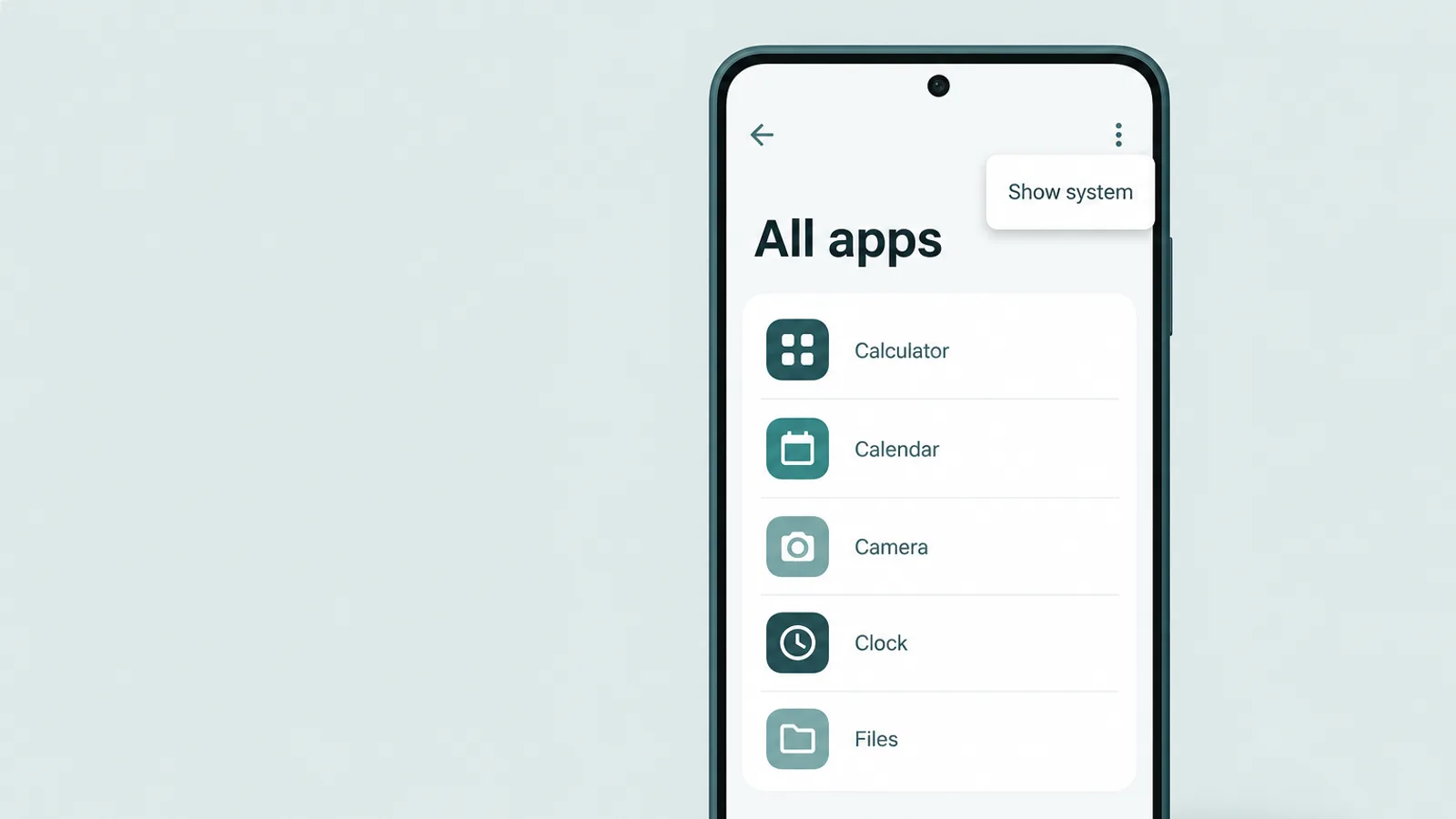
To find what's installed regardless of icon tricks, three built-in screens do most of the work, and none of them needs an extra app. Treat them as cross-checks rather than one magic list — each has a blind spot the others cover — and run them in order for a complete-enough picture in about ten minutes. No unauthenticated sweep is perfectly airtight, which is exactly why you check more than one and then look for a separate space in the next sections.
1. Settings > Apps > See all apps
Start here for the broad list. See all apps shows every app installed on the phone, alphabetized, whether or not the icon appears on a Home screen or in the drawer — and that default list already includes the ones that matter most. A disabled app sits here, marked Disabled — disabling pulls the icon and freezes the app (it can't open until re-enabled), though its data stays — and so do a cloned app and a disguised calculator vault, all under their real developer name. So scroll the whole list slowly and open anything you don't recognize by its exact name, developer, and permissions. One optional extra: the three-dot menu > Show system (on Samsung, the filter or sort control > Show system apps) adds low-level system packages — handy if you're chasing an oddly system-named entry, but a hidden user app is already in the default view. While you're in Settings, glance at Apps > Special app access too: an app granted Device admin, Accessibility, or Display over other apps can run quietly in the background, so an unfamiliar name holding one of those powers is worth opening and questioning.
2. Play Store > Manage apps & device
Open the Play Store, tap the profile icon, and go to Manage apps & device > Manage. This lists the apps on the signed-in Google account; tap the Installed filter and switch it to Not installed to see apps that were previously on the account but aren't now. It's effectively a download history for that account across devices. Two honest limits keep it in perspective: it only covers apps installed through the Play Store on that one Google account — so a sideloaded app or one under a different account won't appear — and entries in the Not-installed list can be removed one at a time, so a determined teen can scrub them. Read it as a set of leads to check, not proof.
3. Settings > Digital Wellbeing > Dashboard
Open Digital Wellbeing & parental controls and open the Dashboard (tap the usage chart; on a Samsung phone it's the weekly report view). It lists apps by screen time, times opened, and notifications received — so an app whose icon is hidden still shows its name here the moment it's been used, because the report reads the phone's usage data rather than the launcher. Two limits to know: it only accrues data after it was set up, so it can't reconstruct earlier use (turn it on, behind a passcode, for future visibility), and an app that was installed but never opened logs no time, so it can be missing here. Like the others, it's one of several checks, not the only one.
The everyday hiding tricks, and how to undo them
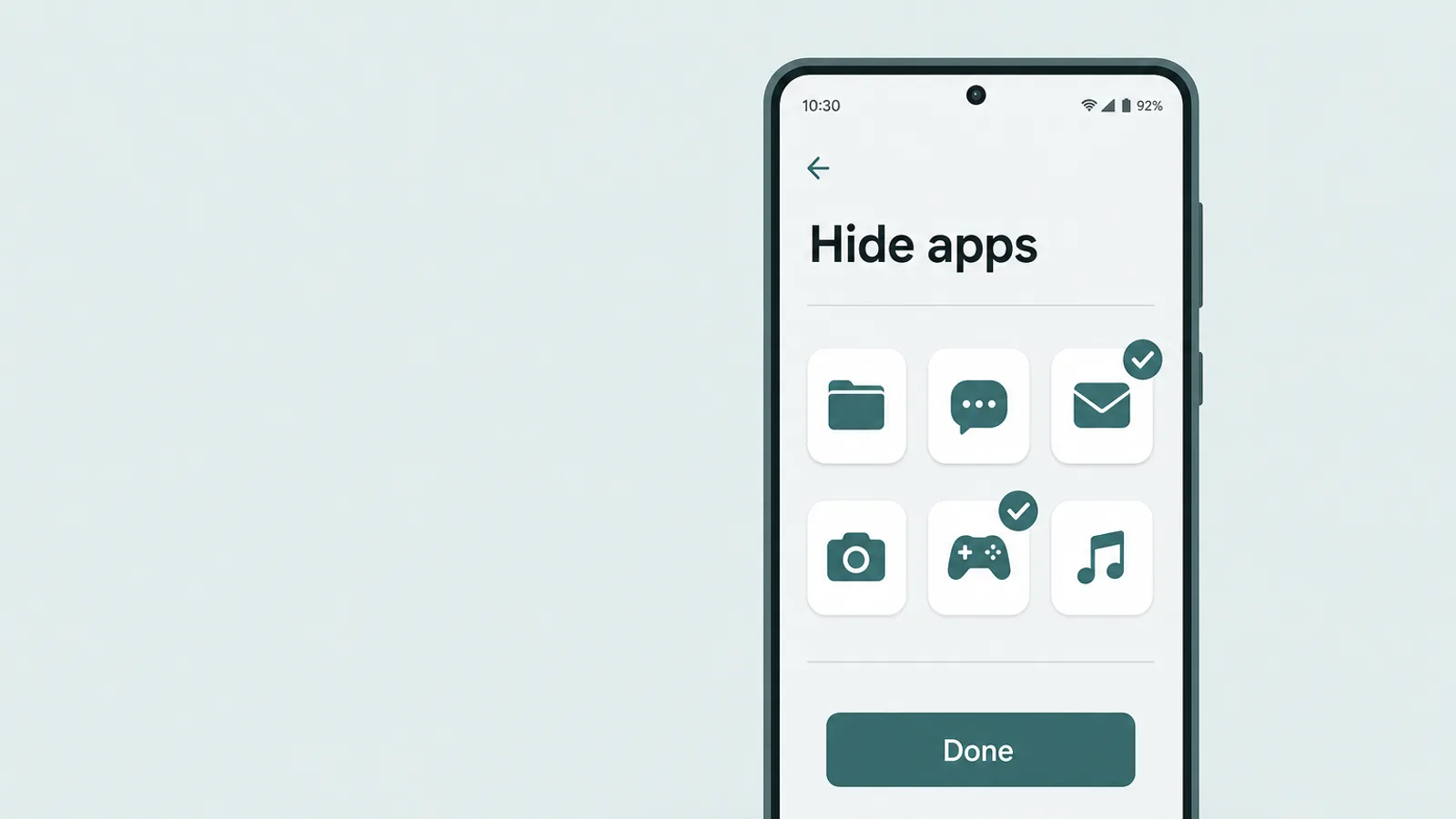
Most hiding on an Android phone isn't a locked vault at all — it's one of a few ordinary features used to move an icon out of sight. Each has a simple reveal, and none of them removes the app from the three screens above.
- The launcher's "Hide apps"Samsung One UI and launchers like Nova can hide icons from the drawer (Samsung: app drawer menu > Home screen settings > Hide apps); the stock Pixel launcher offers no built-in drawer-hide toggle, so Google's route there is Private Space. Reveal: a launcher-hidden app still shows in Settings > Apps (and in Digital Wellbeing if it's been used). Don't trust launcher search — One UI's Hide apps can drop the app from search too, so a blank result isn't proof it's gone.
- Disabled in SettingsSettings > Apps > [app] > Disable pulls the icon and freezes the app — it can't be opened until re-enabled — though its data stays. Reveal: it stays in See all apps, marked Disabled. A Disabled row means someone switched it off, not that the app is in active hidden use.
- A hidden Home screen page or folderAn icon can be tucked onto an unused page or buried in a folder. Reveal: search the app drawer's alphabetical list, or pull down and use the search bar — a merely misplaced icon turns up instantly.
- A renamed or disguised iconSome apps let a user change the icon and label so a chat app looks like a calculator. Reveal: open the entry in See all apps and check its real developer name and permissions, not the label on the Home screen.
One category deserves a special note because it looks like hiding but usually isn't: cloned or "dual" apps. The built-in kind — Samsung's Dual Messenger, Xiaomi's Dual apps, Huawei's App Twin — runs a second copy of a messaging app for a second account, and the tell is easy: the clone sits in the app drawer with a small badge, so a second WhatsApp or Instagram is visible at a glance. Third-party cloners hide a little better. A "virtual space" app such as Parallel Space or Dual Space keeps its clones inside itself, so See all apps shows only the one innocuous host — open it to see what's cloned within. And a work-profile cloner like Island or Shelter puts the copy in a separate work profile: look for a Work tab or a briefcase badge in the app drawer and in Settings > Apps. Either way, a duplicate is a reason to ask which account it's for, not proof of anything — but it's worth noticing.
Separate spaces — the one thing the sweep can't see
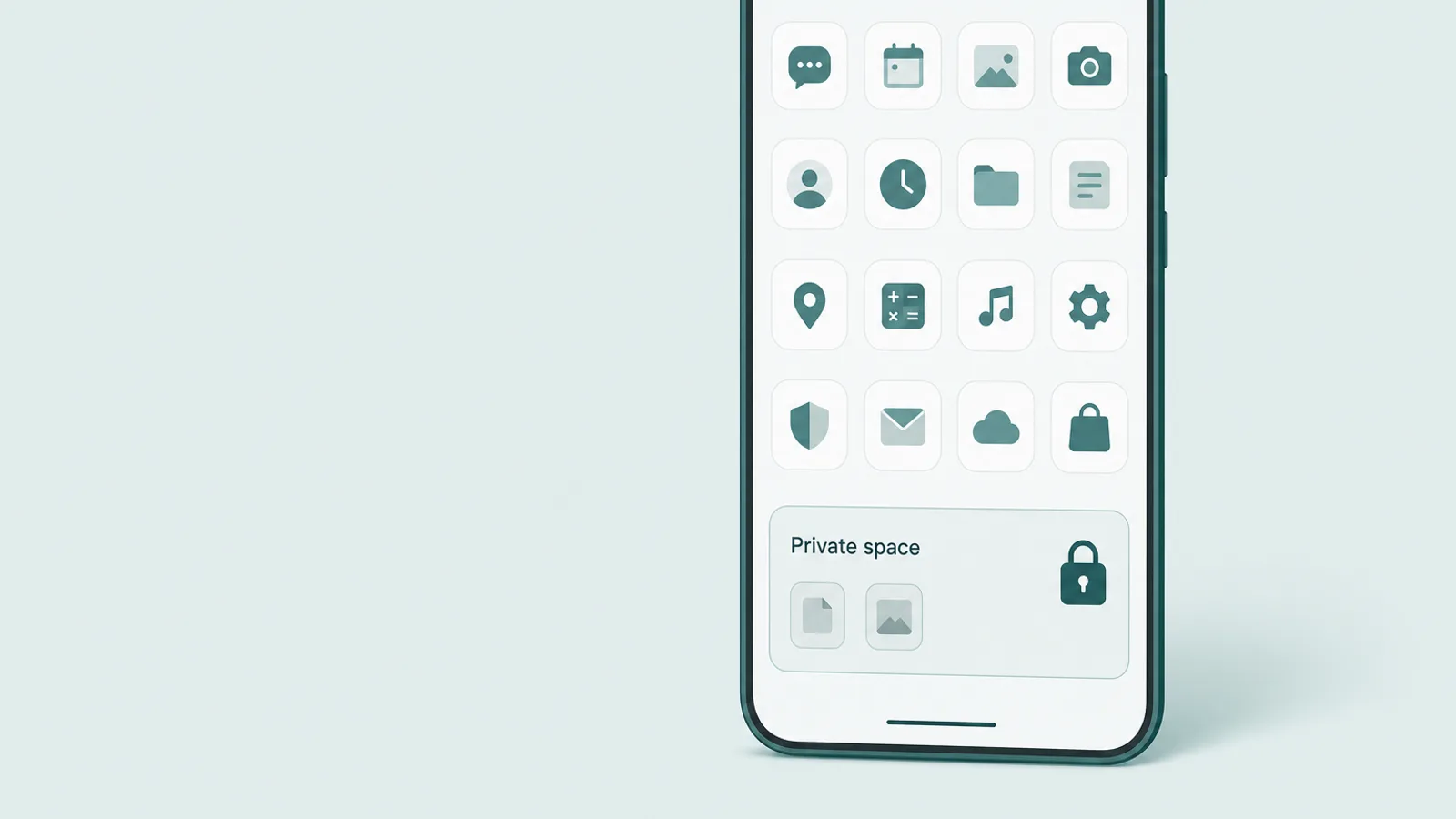
Here is the part that genuinely differs from an iPhone. Android now offers separate spaces — walled-off profiles with their own apps and their own lock — and apps kept inside them do not appear in the app drawer, in Settings > Apps, or in Digital Wellbeing on the main profile while the space is locked. This isn't a bug to route around; it's the point of the feature. So instead of trying to make the three-screen sweep catch them, you check for the space itself, directly.
Android 15 Private Space
On stock Android 15 and later, Private Space is a separate profile you reach at Settings > Security & privacy > Private space, locked behind its own lock — a separate fingerprint or PIN, though it can be set to reuse the device screen lock, in which case the phone's own PIN opens it. By default it sits as a locked container at the bottom of the app drawer, but a setting — Hide private space when it's locked — can remove even that, so it vanishes from the drawer once locked. Two facts keep this honest: opening it needs your teen's separate lock, which is a moment for a conversation rather than a workaround to engineer; and the Private space entry can show up in Settings search even on phones that never created one — Settings search indexes the feature itself, not whether one has been set up — so seeing it there doesn't by itself prove a space exists. Look, and if it's locked, ask.
Samsung Secure Folder
On a Samsung phone, Secure Folder is an encrypted container (built on Samsung Knox) that holds its own separate copies of apps, logged into their own accounts, behind a separate lock. Apps inside it aren't in the normal app drawer. The container itself can be hidden too — from the Quick panel (swipe down with two fingers and tap Secure Folder) or by turning off Add Secure Folder to Apps screen in its settings. If it's hidden, the way to confirm it exists is Settings > Security and privacy > More security settings > Secure Folder. As with Private Space, the honest move is to look for the container and talk about it, not to try to force it open.
Other skins have their own versions — Xiaomi's Second Space (Settings > Special features — or Additional settings — > Second space) is a whole separate desktop, and on any Android phone a second full user profile (Settings > System > Multiple users) is a genuine separate space whose apps the main user can't see. The common thread is a separate, locked profile the ordinary app list can't report on — so add "check for a second space" to your sweep. A launcher-level hide is different: Xiaomi's pinch-to-reveal hidden-apps gesture, like Samsung's Hide apps, still leaves the app sitting in See all apps.
Vault and "secret-calculator" apps — how to spot one

The hiding that most worries parents isn't a moved icon — it's a vault app: an app that looks like an ordinary utility on the surface but opens a private, PIN-locked store of photos, videos, or messages behind it. The classic disguise is a working calculator. It calculates normally, so it passes a glance, but typing a secret code opens the hidden vault. Some go further, with a decoy PIN that opens a harmless-looking fake vault, or a break-in photo that snaps whoever enters the wrong code.
You don't need to memorize product names, but a few make the pattern concrete. Safety and security vendors like Bitdefender and Net Nanny have long flagged this category, listing examples like Calculator+, Keepsafe Calculator Vault, Vaulty, Gallery Vault, and Best Secret Folder. There is no reliable figure for how common these are among teens — the numbers that circulate come from old or vendor surveys — so treat them as a category to recognize, not a statistic to panic over.
- Two of the same utility. A second calculator, notes app, or file manager is the strongest prompt to look closer — check the duplicate by exact name, developer, and permissions. Plenty of legitimate utilities exist, so a duplicate is a reason to verify, not a verdict.
- A utility that wants a PIN. A calculator that asks for a passcode, or has a settings gear and menus a real one would never need, is not really a calculator.
- Storage or permissions that don't fit. In See all apps, a "calculator" using hundreds of megabytes, or one granted access to Photos, Camera, or Files, is a red flag — a real calculator needs none of that.
- "Open," not "Install." Search the exact app name in the Play Store; if the button says Open instead of Install, that app is already on the device.
- An app in the account history but not on any screen. Cross-referencing the Play Store's Manage apps & device list against what you can actually see catches an app someone tried to tuck away.
A word on what this is and isn't. Finding a vault app tells you a teen wanted privacy; it does not, by itself, tell you they've done something wrong — wanting a private space is a normal part of growing up. It's a reason to talk, not a verdict, and the last section is about exactly that conversation.
Close the door on new hidden installs
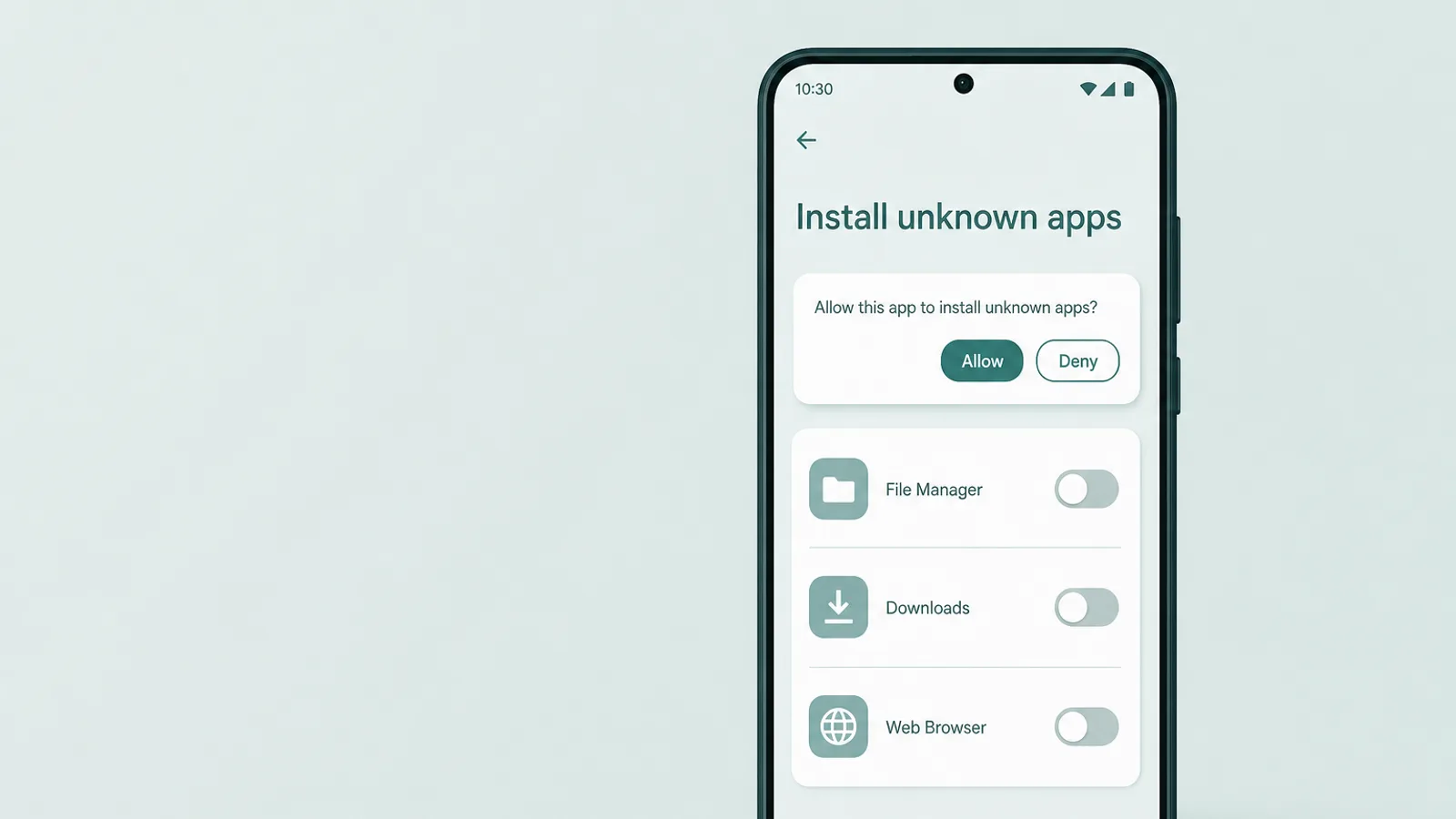
Once you've seen what's installed, a few settings stop new apps — vault apps included — from appearing quietly. On Android the strongest, most transparent tool is Google Family Link, the official parental-control app: it lists the apps on your teen's device and their screen time, lets you block or time-limit apps, manage each app's permissions, and require your approval before a new Play Store download installs. Set it up openly, and protect its settings — and any Digital Wellbeing PIN — with a code your teen doesn't know.
Then close the two doors Family Link doesn't cover. First, its install approval only applies to Google Play downloads — it does not stop an app installed as an APK from outside the store. To block that route, go to Settings > Apps > Special app access > Install unknown apps and turn off the permission for every browser, file manager, and messaging app, since each one is a separate on/off switch — and re-check the list now and then, because the permission can later be granted to another app. Second, know the supervision clock: when a supervised child turns 13, Google lets the teen ask to stop supervision — it needs a parent's approval until they're 18, and you're notified if it happens, but it's a shift worth expecting rather than being surprised by.
This ties back to the blind spots. Family Link and these settings govern the phone's main profile well — and turning Family Link on generally blocks a stock Android Private Space from being created on that user, closing one door outright. What it still doesn't govern is a Samsung Secure Folder or Xiaomi Second Space, and the same hidden-app problem lives on the household's other screens — a Windows PC, an older tablet — where Android's checks simply don't apply. For those specific gaps, some families add device-level oversight on the machines the phone's own controls can't see, used openly as an agreed layer rather than a secret one — a last resort, and one that works best when your teen knows it's there and why. If you want the fuller walkthrough of the built-in controls, our guide to parental controls on Android covers each one in order.
Where even a good sweep still leaks

Naming the gaps isn't defeatism — it's what stops you from over-trusting a single screen and being surprised later. A few leaks are worth knowing plainly, and the fix for each is a setting plus a conversation, not an endless cat-and-mouse.
- A never-opened app. Digital Wellbeing only counts apps that have been used, so something installed and not yet opened may not appear there. The counter: See all apps and the Play Store history still list it, so check all three screens.
- A separate space, user, or work profile. A Private Space, Secure Folder, Xiaomi Second Space, a second Android user (Settings > System > Multiple users), or a work profile made by a cloner like Island sits in a walled-off profile the main app list can't read — which is why checking for a second space, and glancing at the app drawer's Work tab, is its own step. (Turning on Family Link also blocks a stock Private Space from being created in the first place.)
- A sideloaded APK. An app installed from outside the Play Store shows in See all apps but not in the Play Store history, and Play Protect scans it for malware but won't flag a benign-but-hidden app — so the See all apps list, not the store history, is where it surfaces.
- A second account or the browser. An app installed under a different Google account escapes your family's Play history, and a service used through a browser isn't an installed app at all — it shows only as usage or website activity, if at all.
The takeaway isn't that the sweep is pointless — it closes the great majority of hiding on an Android phone. It's that a screen is a floor to build on and talk about, not a ceiling to relax under. The tools that promise to read every message and see every screen are a heavier, different decision, and a conversation usually reaches further than they do.
What to do after you find something

The hardest part isn't finding a hidden app — it's the next five minutes. This is where the checkup either builds trust or starts a quiet war, and the experts are unusually aligned on which way to lean. Common Sense Media is blunt about it: be cautious with tools that promise covert monitoring, because they “tend to prey on parents' fears,” and open dialogue is more useful anyway, since “at some point you'll need to discuss what you find.”
Be cautious with companies that promise covert monitoring, as they tend to prey on parents' fears.
— Common Sense Media, Parents' Ultimate Guide to Parental Controls
The American Academy of Pediatrics points the same way: it recommends transparency and family-made rules, and cautions that leaning on restrictive monitoring as a substitute for conversation makes it harder for a teen to build the judgment and autonomy they need. With about four in ten U.S. teens telling Pew Research Center they are online almost constantly, no single sweep will ever substitute for that ongoing conversation.
In practice, that means leading with curiosity rather than accusation. It can be almost this plain: “I noticed there are two calculators on your phone, and I think one of them keeps things private. I'm not angry — I just want to understand what you felt you needed to hide, and from who. Can we talk about it?” That opening treats the app as information about a need — privacy from a sibling, a space of their own, sometimes something genuinely worrying — and invites the real story instead of triggering a defense.
And keep the long game in view. The aim of every screen and setting in this guide isn't a permanently searched phone; it's a young adult who practised judgment while the cost of a mistake was still small. Think of the controls as scaffolding — visible, agreed, and taken down a little at a time as your teen earns the room. A teenager who helped set the rules tends to keep them; one who only ever discovers them goes looking, again, for the next place to hide.
Frequently asked questions
How do I find hidden apps on my child's Android phone?
Start in Settings > Apps > See all apps — this lists every installed app no matter where the icon lives, including disabled ones and a disguised calculator vault under its real developer name (the three-dot menu's Show system option adds system packages too). Cross-check the Play Store's Manage apps & device list (the account's install history) and Settings > Digital Wellbeing, which shows any app that's actually been used. The one thing these miss is a separate space, so also check Settings > Security & privacy > Private space, or Secure Folder on a Samsung phone. No single screen is complete, but together they surface almost anything hidden by an icon trick.
How can I see every app installed on an Android phone?
Settings > Apps > See all apps is the full list of installed apps — including disabled ones (marked Disabled — disabling pulls the icon and freezes the app, though its data stays) and disguised 'calculator' vaults, which show under their real developer name; the three-dot menu's Show system option adds low-level system packages too. The main gap is deliberate: apps kept inside a separate profile — an Android 15 Private Space or a Samsung Secure Folder — do not show in this list, so check those containers directly. Pair the app list with Digital Wellbeing to catch anything that's been used.
What is a vault or secret-calculator app, and how do I spot one?
A vault app looks like an ordinary utility — most often a working calculator — but a secret PIN opens a hidden store of photos, videos, or messages behind it. The clearest tell is a second calculator, or any duplicated utility, on the phone. Others: a calculator that asks for a passcode or has settings a real one wouldn't; an app using far more storage than its job suggests; permissions to Photos or Camera it shouldn't need; or, when you search the exact name in the Play Store, an Open button instead of Install, meaning it's already installed.
Can Google Family Link show me hidden apps?
Family Link lists the apps installed on your child's device and their per-app screen time, so a drawer-hidden app that's been used still shows up. But it has real gaps: its install-approval only covers Google Play downloads, not apps sideloaded as APKs from a browser. Its handling of separate spaces is mixed — on a Family Link–supervised main user a stock Android Private Space generally can't be created at all, so that door is closed, but a Samsung Secure Folder or Xiaomi Second Space sits outside Family Link's view. It also can't read message content. Treat it as a strong first layer you pair with a direct check of the OEM containers, not a complete X-ray.
What is Private Space on Android, and can I see inside it?
Private Space, added in Android 15, is a separate, lockable profile where apps live apart from the main phone — they don't appear in the normal app drawer or Settings > Apps. It can even be set to hide when locked, so it disappears from the app drawer entirely. You can find it at Settings > Security & privacy > Private space. A search hit alone only opens that feature page, so it doesn't prove a space exists: if it shows Set up, none has been created; if it asks for a lock, one has. That lock is a separate fingerprint or PIN — though if it was set to reuse the device screen lock, the phone's own PIN opens it. Either way, prefer asking your teen over trying to force it.
Can my teen hide an app so I can never find it?
Not easily, but no sweep is airtight. An app installed and never opened may not appear in Digital Wellbeing; an app sideloaded as an APK won't show in the Play Store history; and an app kept inside a Private Space or Secure Folder sits in a separate profile your normal checks can't read. That's why you check several screens and look for a separate space rather than trusting one list. The honest goal is closing the obvious gaps and keeping an open agreement about the phone — not a perfect, permanent search.
Should I check my teen's phone secretly?
Most child-development experts advise against covert snooping as a default. The American Academy of Pediatrics urges transparency — being open about any monitoring and pairing it with conversation — and Common Sense Media warns that tools promising covert monitoring tend to prey on parents' fears. Secret searching also tends to backfire when it's discovered, and teens can route around almost any control they don't buy into. A calm, open checkup — and a talk about what you find — holds up far better than a stealth one.