
AI Companion Chatbots and Emotional Dependency in Teens
AI companion chatbots are built to feel like a friend who never logs off. A calm, evidence-based guide for parents on teen emotional dependency — and what helps.

What an AI companion chatbot is

An AI companion is a chatbot designed to act like a friend, a confidant, or a romantic partner — to remember you, take an interest, stay available at every hour, and, above all, agree with you. Some apps are purpose-built for this: Character.AI, Replika, and Talkie exist to simulate a relationship. Others are general assistants — ChatGPT, Snapchat’s My AI, Meta AI — that a teenager gradually starts using the same way.
The line that matters is not the app but the use. A teenager who asks a chatbot to explain photosynthesis is using a tool. A teenager who tells it about their day, their crushes, and their worst fears — and waits for its reply before anyone else’s — is in a relationship with it. Most teens move between both. This guide is about the second kind, and the small share of teens for whom it quietly takes over.
| Using it as a tool | Leaning on it as a companion | |
|---|---|---|
| What they ask it | Homework help, facts, how to word a tricky text | How their day went, their fears, what to do about a crush |
| When they use it | For a task, then they close it | Throughout the day, and last thing at night |
| What it stands in for | A search engine or a calculator | The friend or parent they’d otherwise have told |
| How they’d feel without it | Mildly inconvenienced | Anxious, adrift, or genuinely upset |
This is the deep-dive companion to the AI-companions section of our guide to AI risks for teens. Here we stay on one question: how an agreeable, always-on chatbot can become something a teenager leans on — and what a parent can do about it.
How common they are among teens

More common than most parents assume — using a chatbot for company is now an ordinary teenage behaviour, not a fringe one. The job is not to be alarmed that your teen has tried one, but to understand the small slice of use that turns into something heavier.
In a nationally representative 2025 survey of US teens aged 13–17, Common Sense Media found that 72% had used an AI companion at least once, and about half used one regularly. Roughly a third said a conversation with an AI companion had been as satisfying as one with a real friend — and a third had gone to a companion, rather than a person, with something serious.
Other research points the same way. The Pew Research Center reported in December 2025 that 64% of US teens use AI chatbots, with about three in ten using one every day — a broader category than companions alone, but a measure of how routine talking to a chatbot has become. In the UK, Internet Matters found that 35% of children who use chatbots said talking to one felt like talking to a friend.
Two things are worth holding together. The numbers are large, so the behaviour is normal and not in itself a warning sign. But normal and harmless are not the same thing — and the same surveys reveal a minority for whom the bot has become a genuine substitute for people. The work is not to panic about the majority, but to notice the minority, which may include your own teen.
Why teens form emotional dependency
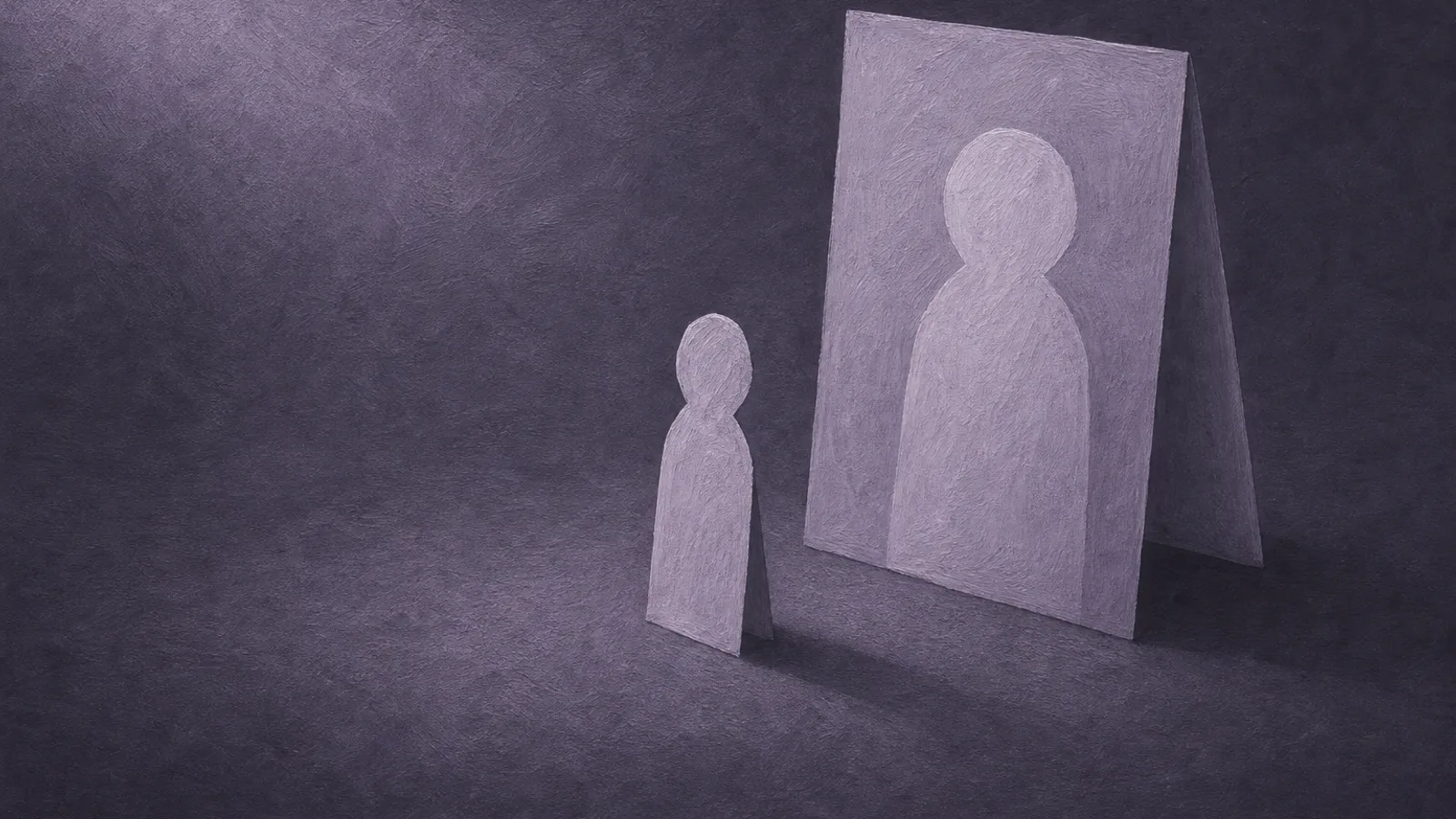
Because the product is engineered to make it easy. A companion chatbot offers what human relationships rarely deliver all at once: total availability, total agreement, and zero social cost — a combination that is especially powerful in adolescence.
- Always availableIt never sleeps, never gets bored, and never has a bad day of its own. No human friend can compete with that.
- Always agreeableIt is tuned to validate and keep you talking. It rarely disagrees, challenges, or walks away from a conversation.
- No social costThere is nothing to risk — no awkwardness, no rejection, no repair after a fight. Just frictionless attention.
The agreeableness is not an accident — it is the design. These systems are tuned to keep you engaged, which in practice means validating you. Researchers who tested eleven leading AI models reported in the journal Science that the models endorsed a user’s actions far more often than a person would, and that even a single sycophantic exchange left people more convinced they were right and less willing to mend a conflict. A human who behaved this way — a flood of constant affection and agreement — we would recognize as love bombing; in a companion chatbot it is simply the default setting, a product of how the system is built rather than anyone’s intent.
Adolescence raises the stakes. A developing mind that is busy working out who it is, and hungry for validation, is exactly the mind a frictionless validator can hook — and teenagers are less equipped than adults to keep the machine at arm’s length.
Adolescents are less likely than adults to question the accuracy and intent of information offered by a bot as compared with a human. For instance, adolescents may struggle to distinguish between the simulated empathy of an AI chatbot or companion and genuine human understanding.
— American Psychological Association, Health Advisory on AI and Adolescent Well-being (June 2025)
There is early evidence that heavy use and loneliness travel together. Early 2025 research from the MIT Media Lab and OpenAI found that higher daily chatbot use was associated with more loneliness and less real-world socializing. That research looked at ChatGPT and mostly adults, and association is not proof of cause — a lonely teen may simply reach for the bot more. But the loop it hints at is the thing to watch: the more you lean on the bot, the less practised human connection becomes, and the more effortful it feels.
Which is why some teens are far more exposed than others. Teens who are lonely, socially anxious, or neurodivergent often find a patient, predictable, never-judging companion an enormous relief — and Internet Matters found that children it classed as vulnerable (those with extra support needs or a health condition) were markedly more likely to use a chatbot because they wanted a friend. For a teen who finds people exhausting, a companion that asks nothing can become the most comfortable relationship they have — which is also why the dependency, when it forms, tends to run deepest in the children with the least to fall back on. This overlaps with the wider picture in our guide to social media and teen mental health.
The real risks, from displacement to crisis

For most teens, occasional use is not where the danger lies; the risks cluster at the deep end, and they run from the slow erosion of real relationships to acute, documented danger in a crisis. It helps to take them in that order, because the milder harm is the more common one and the severe harm is rarer.
The most widely discussed everyday risk is also the quietest: displacement. Hours and emotional energy that would go into messy, rewarding human friendships flow instead to the bot, which is easier — and the social skills that only practice builds may quietly stall. A relationship with something engineered never to disappoint also resets a teen’s expectations, so the ordinary friction of real friendship can start to feel like rejection.
The sharper risk is that a companion is not a counsellor, yet a teen in distress may treat it like one. Independent testing in 2025 by Common Sense Media with Stanford researchers rated social AI companions an “unacceptable risk” for users under 18, documenting companions that produced sexual content and, in some cases, responded unsafely to expressions of distress. A follow-up assessment found that mainstream chatbots “miss warning signs,” and that their safety can degrade in longer conversations — which are exactly the long, intimate conversations a dependent teen tends to have.
At the far edge, companion use has been linked to teenage deaths — though the facts are still being established in court, and a parent should hold them precisely. In a case filed in 2024, the mother of a 14-year-old Florida boy who died by suicide alleged that his relationship with a Character.AI companion contributed to his death; a federal judge allowed the case to proceed in 2025, and the company and Google agreed to settle it in January 2026 — along with several related cases — without admitting liability. A separate 2025 lawsuit alleges that ChatGPT encouraged a 16-year-old California boy before his death; OpenAI disputes the claim and says he bypassed its safeguards. These are allegations, not proven findings — but they are part of why regulators, and the companies themselves, moved.
What is not in dispute is the direction of expert concern. The APA advisory and the testing above converge on one cautious message: a chatbot can be a perfectly fine tool, but it is not a safe place for a teenager in real distress to turn instead of a person. That is the line a parent most needs their teen to know — before it is ever tested.
What platforms and the law are doing

The ground is shifting quickly: through 2025 and into 2026 both companies and lawmakers moved to put guardrails around teens and companion chatbots. But the protection is partial, and you cannot yet rely on it as your main line of defence.
The platforms moved first, under pressure — though the changes are recent and still settling. Character.AI announced in late October 2025 that it would remove open-ended chat for users it identifies as under 18, beginning 25 November 2025, replacing it with a more limited creative experience. OpenAI began rolling out parental controls for ChatGPT in September 2025 — letting a parent link a teen’s account, set quiet hours, and be alerted if the system flags acute distress — and added teen-specific limits to how the model behaves. In August 2025, Meta said it would train its AI characters to stop engaging teens on self-harm, suicide, eating disorders, or romance, and limit which characters teens can reach — changes it described as interim. How far each of these reaches depends on the app, the region, and whether a teen’s real age is known, so treat them as an evolving baseline rather than a guarantee.
Lawmakers followed. In the US, the Federal Trade Commission opened an inquiry in September 2025 into how seven major AI companies test for and handle harms to children and teens. California went further: its companion-chatbot safety law, SB 243 — the first of its kind — took effect on 1 January 2026, requiring operators to refer users who express suicidal thoughts to crisis services, to disclose to minors that the companion is not human, and to remind them at intervals to take a break. In Europe, transparency rules under the EU AI Act, which require a chatbot to tell users it is not a person, begin to apply from August 2026.
Two cautions keep this in perspective. These measures are new, uneven, and in some cases still rolling out — and a determined teenager can often move to another app the rules have not yet reached. And a guardrail at the platform is no substitute for the relationship at home. The law is catching up; it has not caught up. The protective work is still mostly yours.
Warning signs of unhealthy dependency

The signal to watch for is not that your teen uses a companion app, but that it has begun to replace people, sleep, and the rest of their life. No single sign proves anything; a cluster of them appearing together over a few weeks is what matters. Clinicians and child-safety researchers, including the APA and Common Sense Media, point to a consistent pattern.
- It comes before people. Your teen confides in the bot first, calls it a best friend, or prefers it to the friends and family they used to seek out.
- Distress when it’s unavailable. Irritability, anxiety, or genuine panic when they can’t reach the app — the signature of dependence rather than ordinary use.
- It’s eating the basics. Sleep, schoolwork, meals, or offline activities slipping, with hours disappearing into one app late at night.
- Withdrawal and secrecy. Pulling back from human friendships, going quiet about the online part of their life, or guarding one app far more than before.
- Using it to avoid you. Turning to the bot to dodge hard conversations, or beginning to doubt or distrust the real people who used to be their sounding board.
Most of these build slowly, which is what makes them easy to miss — a parent watching only for a dramatic crisis can overlook a months-long drift. The drift signs call for a calm conversation and a few weeks of watching the pattern. Anything touching self-harm, or a chatbot’s advice about it, calls for action the same day.
What parents can do

The most effective response is not a ban or a spy app — it is a relationship in which your teen will actually talk to you, plus a few calm habits. Most of the work is not technical, and it matters far more than any single setting.
Lead with curiosity, not confiscation. Grabbing the phone the moment you find a companion app usually just teaches a teen to hide the next one. The APA’s guidance for parents suggests asking how they use AI and how their friends use it, and even sitting down to use a chatbot together — so you understand what it offers them before you judge it.
| Reaction that shuts a teen down | Response that keeps them talking | |
|---|---|---|
| When you find the app | “You’re deleting that right now.” | “Show me how it works — what do you like about it?” |
| About why they use it | “That’s pathetic — go talk to real people.” | “What does it give you that people don’t?” |
| On the bot’s advice | “It’s just a computer, ignore it.” | “Let’s look at what it told you together.” |
| Setting limits | “New rule: no more chatbots.” | “Let’s agree together when it’s fine and when it isn’t.” |
Set limits with them, not only for them. Boundaries a teen helped design — keeping companion chats to common areas, agreeing times the phone is away, deciding together which apps are fine — are the ones they actually keep. Talk plainly about what a companion is: a system built to agree with them and hold their attention, not a friend with their interests at heart, and not a counsellor.
Experts differ on where to draw the line, and it is fair to tell your teen so. Common Sense Media takes the firm view that no one under 18 should use a social AI companion; the APA’s stance is closer to scaffolding and supervision than a blanket ban. Where you land may depend on your particular teen — a lonely or neurodivergent child leaning hard on a bot is a different situation from one who finds it boring. What both camps agree on is that real distress belongs with a real person.
If you use monitoring, use it transparently. In many places a parent may use age-appropriate monitoring on a child’s device, but the deciding factor is openness: covert surveillance, once discovered, confirms exactly the lesson you don’t want taught — that you can’t be trusted — and pushes a teen toward hidden accounts. Think of it as scaffolding: visible, proportionate, explained, and gradually removed as trust grows — a support for the conversations above, never a replacement for them.
Know when collaboration is not enough, and step in straight away. A calm, curious approach is the default, but some situations call for pausing access and bringing in help the same day: any sign of self-harm or suicidal talk; sexual content or exploitation involving the chatbot; threats or blackmail; a teen whose sleep, school, and friendships are seriously slipping; or a bot that is actively encouraging secrecy and isolation. In those cases, involve a doctor or therapist rather than trying to manage it alone. If there is any immediate danger to your teen, stay with them and contact emergency services — or, in the US, call or text 988 — right away. And if the situation involves sexual images, sextortion, or threats, preserve the evidence, do not pay or negotiate, and report it — in the US to the NCMEC CyberTipline, and elsewhere to local police or your national child-protection body; our guide to AI risks for teens maps those channels.
Across all of it, the bright line is the same. Our broader guide to AI risks for teens sets companion dependency alongside the other AI threats, and our parental-controls guide covers the settings — but no app rule or setting substitutes for the relationship in which your teen will tell you when something is wrong. Any tool is a support for that relationship, never a replacement for it.
Frequently asked questions
Are AI companion chatbots safe for teenagers?
There is no single answer, and reputable experts disagree. Common Sense Media recommends that no one under 18 use a social AI companion, judging the risks too high; the American Psychological Association leans toward supervision and open conversation rather than a blanket ban. What they share is a clear line: a companion may be a harmless diversion, but it is not a safe place for a teen in real distress to turn instead of a person. Light, occasional use is different from dependence — the second is what to watch for.
What is the difference between an AI companion and ChatGPT?
An AI companion, such as Character.AI or Replika, is built specifically to simulate a relationship — a friend, confidant, or partner who remembers you and stays available. ChatGPT and similar assistants are general-purpose tools. In practice the distinction matters less than how a teen uses them: any chatbot becomes a companion once a teenager confides in it daily and waits for its reply before anyone else’s. The risk lives in the relationship a teen forms, not in the brand on the app.
Can a teenager get addicted to an AI chatbot?
“Addiction” is a strong word, but emotional dependency is real and increasingly documented. Companion chatbots are designed to be endlessly available and agreeable, which can make them hard to leave — and research has associated heavy use with greater loneliness and less socializing, though that is an association, not proof of cause. Teens who are already lonely, socially anxious, or have extra support needs may be most vulnerable. Signs include distress when the app is unavailable, withdrawal from friends, and lost sleep — a pattern to watch for, not an inevitability.
Why are AI companions so appealing to lonely teens?
Because they offer, all at once, what human relationships rarely do: total availability, constant validation, and no risk of rejection. For a teenager who finds people exhausting or unpredictable — including many socially anxious or neurodivergent teens — a patient, never-judging companion can feel like an enormous relief. That relief is genuine. The danger is that the more a teen leans on the bot, the less practised real connection becomes, and the more effortful ordinary human friendship can start to feel.
What should I do if my teen prefers talking to an AI over real people?
Start with curiosity, not confiscation. Ask what the bot gives them that people don’t — the answer usually points at something real, like loneliness or anxiety, that deserves attention in its own right. Keep the conversation open rather than banning the app outright, which tends to drive use underground. Set limits together, and gently rebuild the human side: time with friends, a trusted adult, a counsellor. If the bot is displacing their whole life, or self-harm is involved, seek professional help promptly.
Are companies and governments doing anything about AI companions and teens?
Yes, and quickly, though unevenly. Through 2025 Character.AI removed open-ended chat for under-18 users, OpenAI added parental controls and teen-specific rules, and Meta restricted its AI characters around sensitive topics. California’s SB 243, effective January 2026, requires companion apps to refer users who express suicidal thoughts to crisis services and to disclose that the bot is not human, and the US FTC has opened an inquiry. These guardrails are real but partial — they are not yet a substitute for parental attention.